



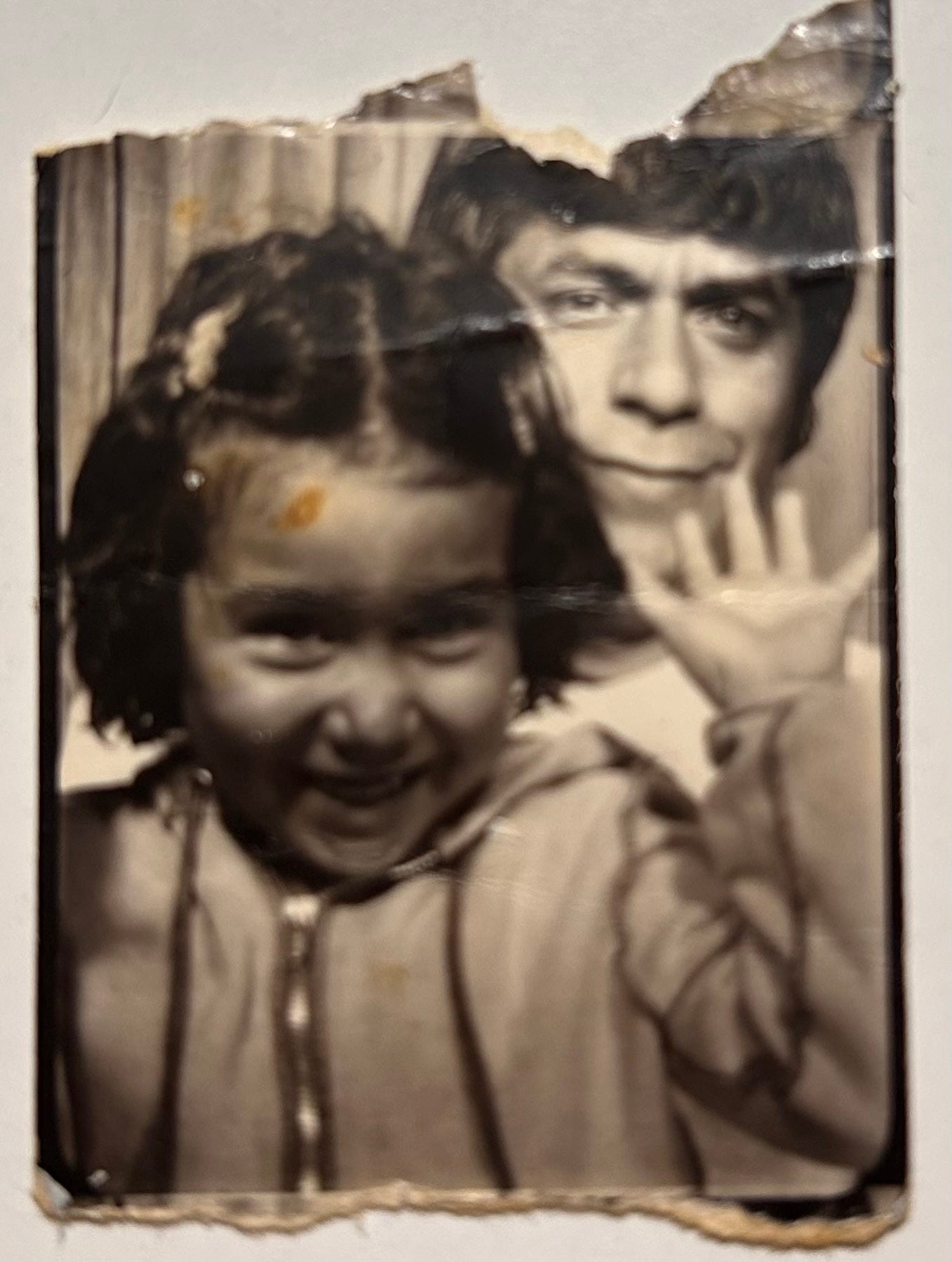
Author’s Note: I’m still finding my way through the loss of my Apá, and these reflections are part of that process. I don’t have all the answers, and perhaps I’m not supposed to. I’m sharing this as a way of working through what his life continues to teach me about leadership, legacy, and the impact we leave on others.
My father, my Apá, passed away on September 3 from pancreatic cancer. He was a two-time cancer survivor, a transplant recipient, and someone who lived through seven years of dialysis. He had faced more than his share of hardship, and somehow, he kept going.
When he received his pancreatic cancer diagnosis, we knew the odds were not in his favor. He was gone three weeks later.
I am still learning how to live in a world without him.
But even in his absence, my Apá continues to teach me. Lately, I have been thinking about one lesson in particular: legacy.
Not the kind of legacy we carefully construct in our professional biographies or the accomplishments we list on a résumé. I am thinking about the legacy that takes shape through the ordinary choices we make, the people we invest in, the opportunities we create for others, and the ways we show up when no one is watching.
I am thinking about leadership.
He Never Called Himself a Leader
My father came to the United States from Mexico as a teenager, crossing the border on foot. He lost his own father when he was just a year old. As an immigrant, he experienced the fear and trauma of being detained by immigration authorities, including twice being caught by La Migra. Yet he returned because he believed this country offered an opportunity to improve life for his mother, his siblings, and eventually his children.
He worked as a waiter for 38 years.
When I was little, I remember thinking we were rich when he came home and gave my mom the tips he had collected that day. I didn’t understand the economics of our household. I understood that my dad worked hard and that he brought something home to us.
He was beloved by his customers, not because he held an impressive title or occupied a position of authority, but because he was a good human being. He was kind. He noticed people. He worried about those who were struggling, especially children.
I remember how he would give our friends rides home, even when it meant going out of his way. He wanted to make sure everyone got home safely.
My father never would have described these gestures as leadership. He was simply doing what he believed was right.
Yet I have spent much of my professional life studying, practicing, and coaching leadership, and I keep returning to the example he set.
Leadership is not limited to the people who occupy formal positions of authority. It is also expressed through the decisions we make about how to treat people, whose needs we notice, and what we are willing to do for someone who may never be able to repay us.
My father taught me that leadership is not just what you accomplish. It is also how people experience you along the way.
The Work We Do to Change Someone Else’s Trajectory
My Apá believed deeply in education.
He wanted his children to have opportunities he never had, and he worked hard to make those opportunities possible. He would remind us that our job was school. Our paycheck would be our grades, which could eventually help us get into college.
Education was not simply something he wanted for us. It was something he valued for himself.
While raising his children, he attended community college to learn English. I remember getting into our family car with my sister as he took us to school. We had our backpacks, and he had his notebooks and textbooks.
I loved looking through his books. I remember thinking that I wanted to go to college so I could have books of my own.
I didn’t recognize it at the time, but my father was teaching me that learning doesn’t stop when you become an adult or a parent. He was showing me what it looked like to keep growing, even when life had already given you plenty of responsibilities.
His investment in education helped change the trajectory of our family. His children attended San Diego State, USC, UCLA, Stanford, and Harvard. His granddaughter is now attending Harvard, too.
Those institutions are meaningful, but the degrees themselves are not the whole story.
The deeper legacy is the expansion of what became possible for the generations that followed him.
I often think about what it means to lead in education. We work to improve schools, develop educators, support families, and create opportunities for students. We spend hours examining data, developing strategies, implementing initiatives, and measuring outcomes.
All of that work matters.
But the most consequential outcomes may not be fully visible while we are doing the work. They may emerge years later, when a student makes a different choice because a teacher believed in them, when a family feels they belong in a school community, or when a young person enters a space they once thought was beyond their reach.
My father never developed a theory of change. But he lived one.
He understood that what we do today can alter what becomes possible tomorrow.
When Someone Else Sees Your Potential
When I was a little girl, my elementary school principal, Mr. Aceves, made a lasting impression on me and my family. He made sure my parents were included in my education, even though they did not speak English.
Years later, when I told my dad I wanted to become a school principal, he was incredibly proud.
He told me that Mr. Aceves had gone to the restaurant where he worked and told him that I was going to become a principal, just like him.
I have carried that story with me throughout my career.
Mr. Aceves may not have known the full extent of his influence. He may have simply been doing what he believed a good principal should do: welcoming a family, building trust, and making sure a child had access to the opportunities school could offer.
But that experience mattered to my father. And my father’s pride in it mattered to me.
It reminds me that leadership is relational. We rarely understand the full impact of our actions, because we are only one part of someone else’s story.
Sometimes we are the person who opens a door. Sometimes we are the person who helps someone see a possibility they had not considered. Sometimes we are simply the person who makes someone feel that they belong.
We may never know what happens next.
As an educator and leadership coach, I have spent years thinking about how leaders develop, how organizations change, and how people learn to see themselves and their work differently. I know the importance of intentional practice, feedback, reflection, and the conditions that make growth possible.
My father reminds me that the human experience of leadership matters just as much.
The question is not only whether we have helped someone achieve something. It is whether our presence, our choices, and our actions have helped change what that person believes is possible for themselves and others.
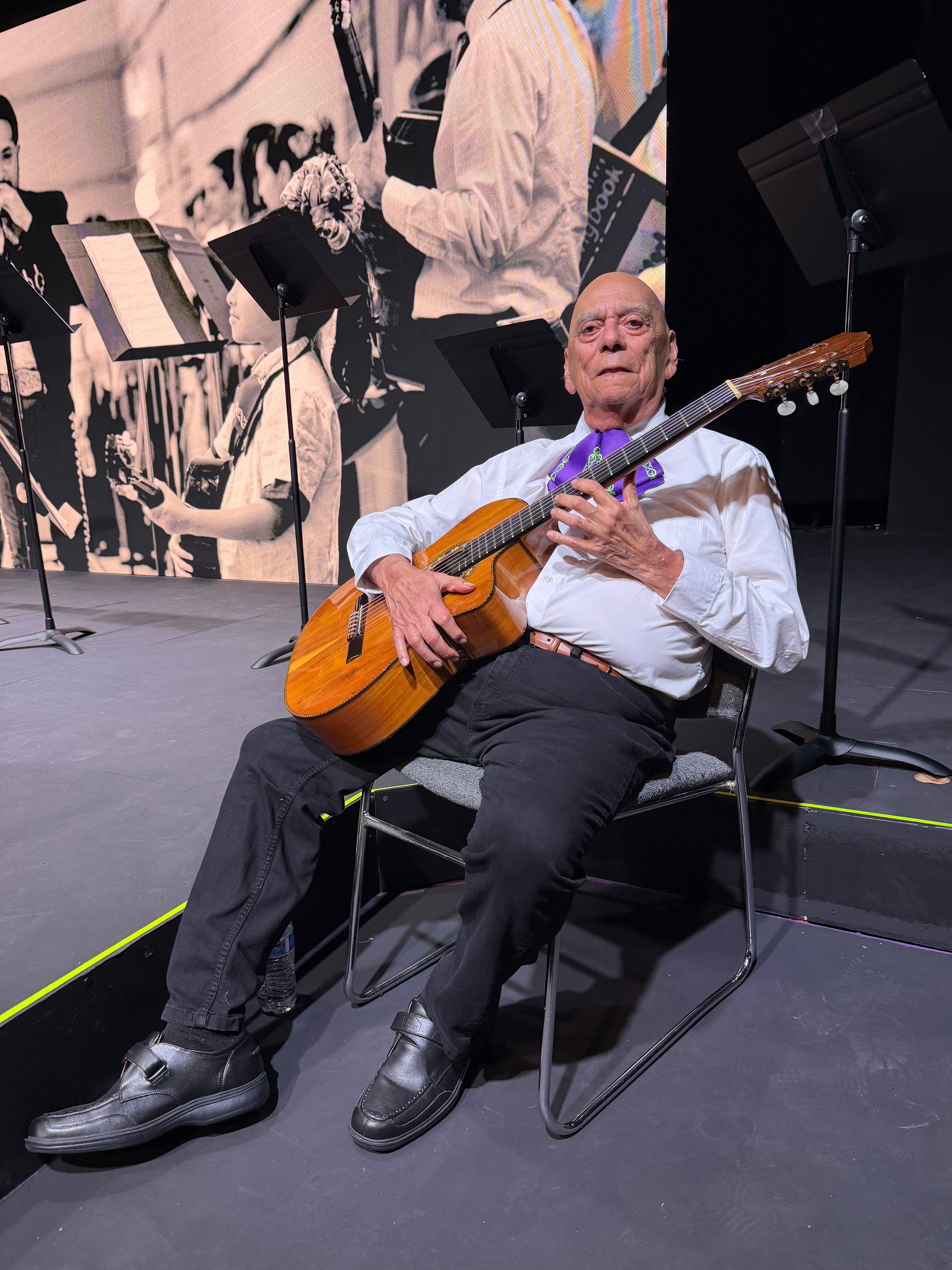
My father, Rosalío Santillán Chavarín, loved performing with the Villa Música Community Mariachi.
The Dream That Waited Until 76
For all the sacrifices my father made for his family, there was a dream he had put aside.
He came from a lineage of mariacheros in Jalisco, Mexico. He loved music, but his mother did not want him playing at parties late into the night, so he never pursued mariachi as a young man.
He worked. He raised a family. He provided.
And then, at 76, he saw an advertisement for a community mariachi class at one of his grandchildren’s schools.
He signed up.
My daughter joined him, and my sister soon followed.
On Saturdays, my father would head to class and spend time with his new community of musicians. He told us that playing allowed him to forget everything else. His mind could focus entirely on the music.
He loved performing and singing for audiences. A dream that had waited decades finally had room to breathe.
A documentary, Yo Soy Mariachero, directed by Steven Adams, later shared his story. I attended the premiere at the San Diego International Film Festival. Seeing and hearing my father on the big screen was surreal. The theater was sold out, filled with people who had come to experience a story that was deeply personal to me but belonged to a much wider community.
I missed him, even as I felt proud of him.
His influence had traveled beyond our family. Young people who saw him perform were inspired to take mariachi classes. A free summer mariachi youth camp is now named Camp Rosalío in his honor.
I think about this part of his life often because it complicates the way we sometimes talk about legacy.
We tend to associate legacy with what we build, achieve, or leave behind for others. But my father’s story also reminds me that our lives are not only about what we give. They are about what we continue to discover, what we allow ourselves to become, and what we give ourselves permission to pursue.
My father spent much of his life making possibilities available to others. At 76, he made a new possibility available to himself.
That, too, was leadership.
He showed his children and grandchildren that a person can be responsible and still be joyful. That sacrifice does not have to mean abandoning every dream. That even after decades of work, there can be something new to learn, a community to join, and a part of yourself waiting to be rediscovered.
Legacy is not only what we leave behind when our lives end. It is also what we model while we are living.
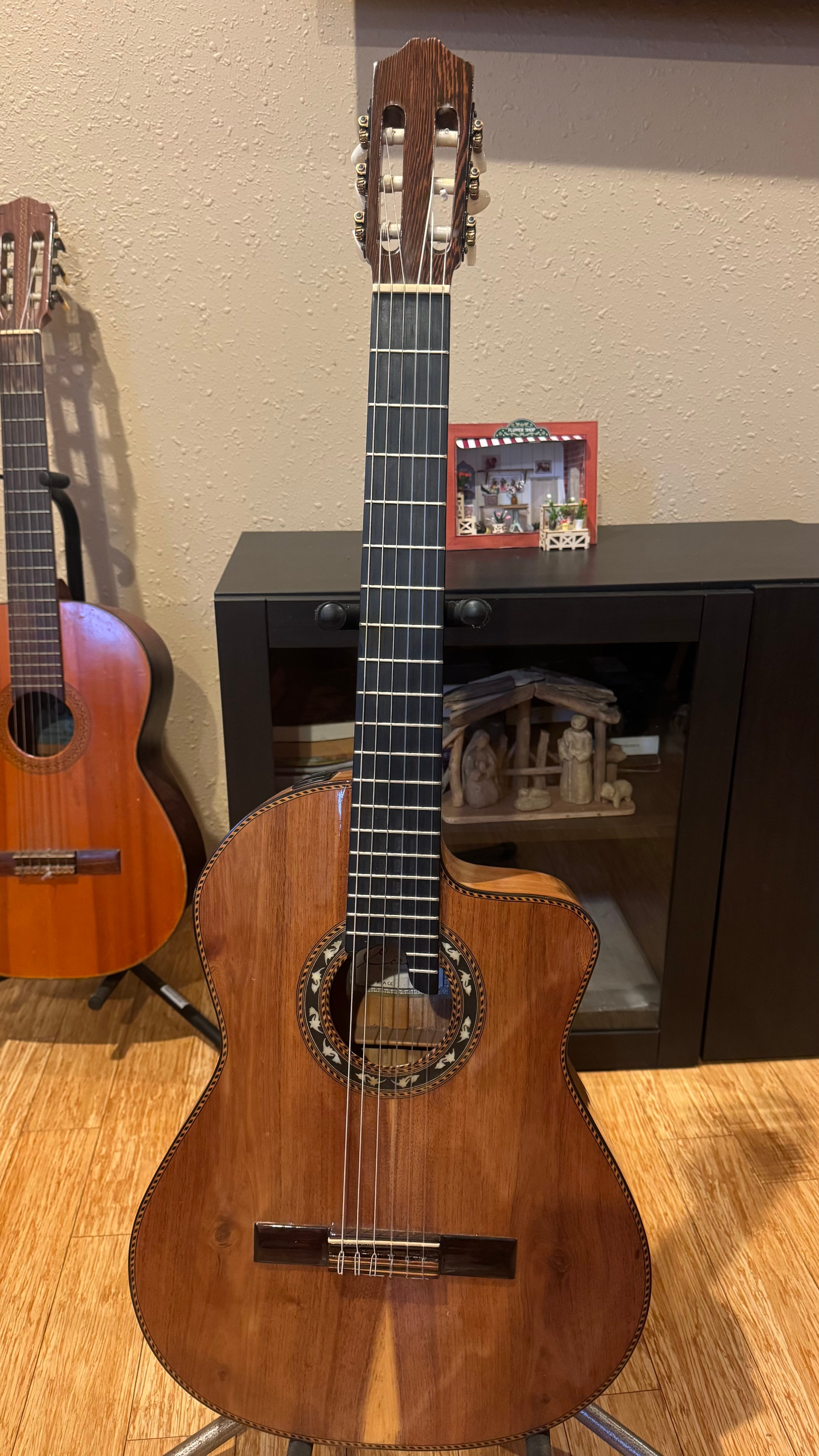
My father’s guitar.
The Question I Am Asking Myself Now
After my father died, I began thinking about my own legacy.
I wondered whether the students and families I have worked with still remember the things I taught them or the school experiences I helped create. I wondered whether the words I write in Substack and LinkedIn make a difference. I thought about the school administrators I teach and whether they will carry something from our conversations into their own communities.
Did I make a difference?
It is a vulnerable question, particularly for those of us who have spent our lives working in service of others.
We invest ourselves in work that often takes years to show results. We make decisions with imperfect information. We try to create better conditions for people whose lives we may never fully understand. We do our best, and then we move on to the next challenge.
In education, we are accustomed to asking whether students are learning, whether our initiatives are working, whether our organizations are improving, and whether our strategies are producing the outcomes we intended.
But there is another question I am learning to ask:
What will continue because I was here?
I don’t mean this as a measure of personal importance. I mean it as an invitation to examine the nature of our influence.
Have we helped others develop the confidence and capacity to lead without us? Have we created conditions in which people can learn, contribute, and thrive? Have we strengthened the relationships and communities that will continue to do important work long after our particular role has ended?
And have we made room for people to become more fully themselves along the way?
My father did not leave behind a leadership framework or a strategic plan. He left behind people who carry his lessons, stories that continue to be told, music that continues to be played, and opportunities that continue to open for others.
His legacy is not one thing. It is the accumulation of a life.
I am beginning to understand that mine will be, too.
The Work That Outlives Us
I don’t have a neat conclusion to the questions my father’s death has raised for me. Grief does not work that way, and neither does leadership.
I know that I want to keep doing work that helps people think more deeply about how they lead, how they relate to others, and what they want their work to make possible. I want to keep writing, teaching, coaching, and creating spaces where leaders can pause long enough to examine what they are doing and choose how they want to move forward.
But I also want to remember that the significance of this work will not be determined entirely by the projects I complete, the positions I hold, or the number of people who read something I write.
Its significance will also live in the people who carry an idea into a meeting, treat someone differently because of a conversation we had, make a decision with greater care, or create an opportunity for someone else.
My Apá taught me this without ever using the language of leadership development.
He taught me through the way he worked, the way he cared for people, the way he invested in education, and the way he returned to a dream that had waited most of his life.
He taught me that a life can be difficult without making a person unkind. That success can be measured in possibilities created for others. That learning never has to end. And that the impact of a life can grow long after the person is no longer here to witness it.
I miss my father. I wish I could tell him what I am thinking about, hear one of his stories, or watch him pick up his guitar again.
But perhaps this is part of what it means to inherit a legacy: to continue the conversation in a different way.
To ask what the people who came before us taught us, what we are choosing to carry forward, and what we might still need to do differently.
My father spent his life helping others imagine a future beyond the one they had been given.
Now it is my turn to ask what I will do with the possibilities he helped create.
And to remember that the work of leadership is never only about what we accomplish while we are here.
It is also about what becomes possible because we were.